 Add to Chrome
 Add to Firefox
 Add to Edge
A Primer in Post-Training Reasoning Data: What We Know About How It Works
Jun 01, 2026
Post-training has become a primary driver of recent progress in large reasoning models, and reasoning data are often the key variable determining whether this stage succeeds. Work on post-training reasoning data has grown rapidly, yet this literature remains scattered across dataset papers, reinforcement-learning recipes, reward-model studies, benchmarks, and frontier system reports. This paper is the first primer to synthesize over 150 key public studies and system reports on post-training reasoning data. We organize the field around four questions: what data objects exist, what makes them useful, how they are constructed, and how they scale. Together, this organization provides an attribution framework for future reasoning-data releases and post-training recipes.

Harness-Bench: Measuring Harness Effects across Models in Realistic Agent Workflows
May 27, 2026LLM agents are increasingly deployed as executable systems that use tools, modify workspaces, and produce concrete artifacts. In such workflows, performance depends not only on the base model, but also on the harness: the system layer that manages context, tools, state, constraints, permissions, tracing, and recovery. However, existing benchmarks typically abstract away execution, compare complete agent systems, or hold the harness fixed, making execution-layer variation difficult to study. We introduce Harness-Bench, a diagnostic benchmark for evaluating configuration-level harness effects in realistic agent workflows. Harness-Bench evaluates representative harness configurations across multiple model backends under shared task environments, budgets, and evaluation protocols, while preserving each harness's native execution behavior. The benchmark contains 106 sandboxed offline tasks constructed from practical agent-use patterns and manually reviewed for realism, solvability, oracle-checkability, and integrity. Each run records final artifacts, execution traces, usage statistics, and validator outputs, enabling analysis beyond final completion. Across 5,194 execution trajectories, we observe substantial variation in completion, process quality, efficiency, and failure behavior across model-harness pairings. These results suggest that agent capability should be reported at the model-harness configuration level rather than attributed to the base model alone. Our analysis further identifies recurring execution-alignment failures, where plausible reasoning becomes decoupled from tool feedback, workspace state, evidence, or verifiable output contracts. Harness-Bench provides a reproducible foundation for diagnosing and improving reliable, efficient, and auditable agent execution stacks.
Thinking with Reasoning Skills: Fewer Tokens, More Accuracy
Apr 23, 2026Reasoning LLMs often spend substantial tokens on long intermediate reasoning traces (e.g., chain-of-thought) when solving new problems. We propose to summarize and store reusable reasoning skills distilled from extensive deliberation and trial-and-error exploration, and to retrieve these skills at inference time to guide future reasoning. Unlike the prevailing \emph{reasoning from scratch} paradigm, our approach first recalls relevant skills for each query, helping the model avoid redundant detours and focus on effective solution paths. We evaluate our method on coding and mathematical reasoning tasks, and find that it significantly reduces reasoning tokens while improving overall performance. The resulting lower per-request cost indicates strong practical and economic potential for real-world deployment.
Beyond Parameter Arithmetic: Sparse Complementary Fusion for Distribution-Aware Model Merging
Feb 12, 2026Model merging has emerged as a promising paradigm for composing the capabilities of large language models by directly operating in weight space, enabling the integration of specialized models without costly retraining. However, existing merging methods largely rely on parameter-space heuristics, which often introduce severe interference, leading to degraded generalization and unstable generation behaviors such as repetition and incoherent outputs. In this work, we propose Sparse Complementary Fusion with reverse KL (SCF-RKL), a novel model merging framework that explicitly controls functional interference through sparse, distribution-aware updates. Instead of assuming linear additivity in parameter space, SCF-RKL measures the functional divergence between models using reverse Kullback-Leibler divergence and selectively incorporates complementary parameters. This mode-seeking, sparsity-inducing design effectively preserves stable representations while integrating new capabilities. We evaluate SCF-RKL across a wide range of model scales and architectures, covering both reasoning-focused and instruction-tuned models. Extensive experiments on 24 benchmarks spanning advanced reasoning, general reasoning and knowledge, instruction following, and safety demonstrate, vision classification that SCF-RKL consistently outperforms existing model merging methods while maintaining strong generalization and generation stability.
Evaluation is All You Need: Strategic Overclaiming of LLM Reasoning Capabilities Through Evaluation Design
Jun 05, 2025Reasoning models represented by the Deepseek-R1-Distill series have been widely adopted by the open-source community due to their strong performance in mathematics, science, programming, and other domains. However, our study reveals that their benchmark evaluation results are subject to significant fluctuations caused by various factors. Subtle differences in evaluation conditions can lead to substantial variations in results. Similar phenomena are observed in other open-source inference models fine-tuned based on the Deepseek-R1-Distill series, as well as in the QwQ-32B model, making their claimed performance improvements difficult to reproduce reliably. Therefore, we advocate for the establishment of a more rigorous paradigm for model performance evaluation and present our empirical assessments of the Deepseek-R1-Distill series models.
TinyR1-32B-Preview: Boosting Accuracy with Branch-Merge Distillation
Mar 06, 2025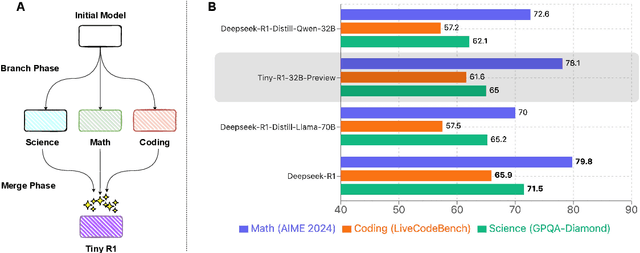
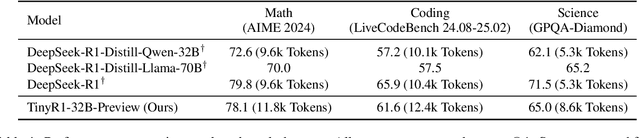
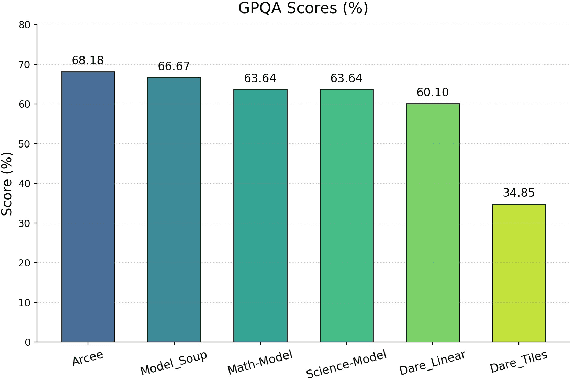
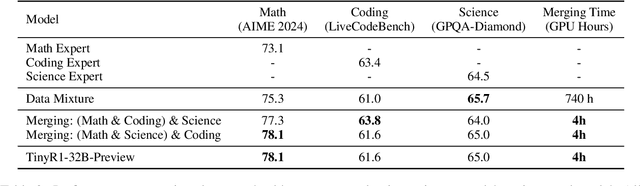
The challenge of reducing the size of Large Language Models (LLMs) while maintaining their performance has gained significant attention. However, existing methods, such as model distillation and transfer learning, often fail to achieve high accuracy. To address this limitation, we introduce the Branch-Merge distillation approach, which enhances model compression through two phases: (1) the Branch Phase, where knowledge from a large teacher model is \textit{selectively distilled} into specialized student models via domain-specific supervised fine-tuning (SFT); And (2) the Merge Phase, where these student models are merged to enable cross-domain knowledge transfer and improve generalization. We validate our distillation approach using DeepSeek-R1 as the teacher and DeepSeek-R1-Distill-Qwen-32B as the student. The resulting merged model, TinyR1-32B-Preview, outperforms its counterpart DeepSeek-R1-Distill-Qwen-32B across multiple benchmarks, including Mathematics (+5.5 points), Coding (+4.4 points) and Science (+2.9 points), while achieving near-equal performance to DeepSeek-R1 on AIME 2024. The Branch-Merge distillation approach provides a scalable solution for creating smaller, high-performing LLMs with reduced computational cost and time.
Chain-of-Thought Matters: Improving Long-Context Language Models with Reasoning Path Supervision
Feb 28, 2025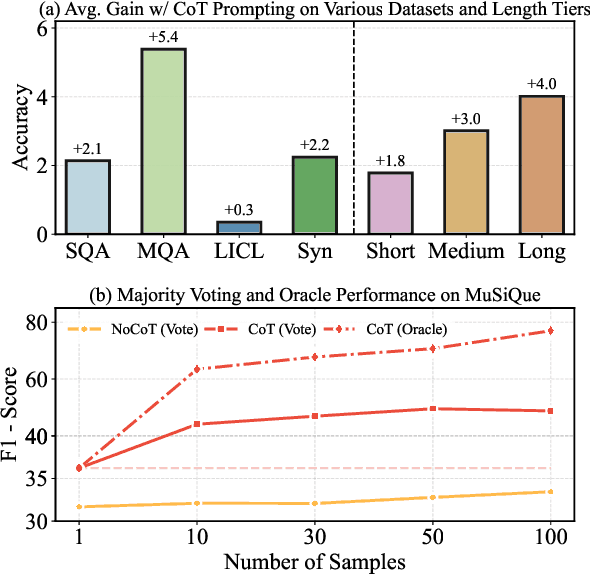
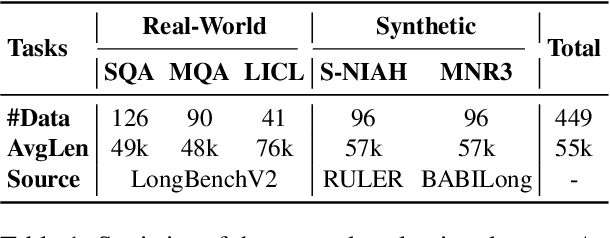
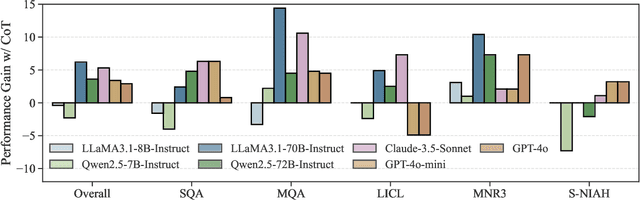
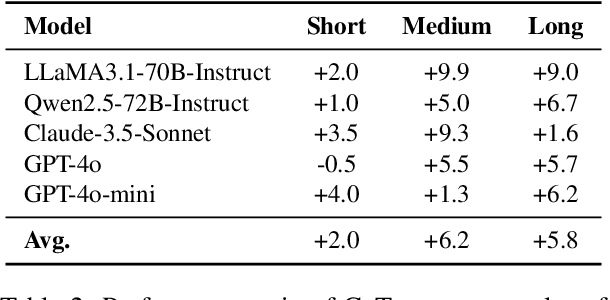
Recent advances in Large Language Models (LLMs) have highlighted the challenge of handling long-context tasks, where models need to reason over extensive input contexts to aggregate target information. While Chain-of-Thought (CoT) prompting has shown promise for multi-step reasoning, its effectiveness for long-context scenarios remains underexplored. Through systematic investigation across diverse tasks, we demonstrate that CoT's benefits generalize across most long-context scenarios and amplify with increasing context length. Motivated by this critical observation, we propose LongRePS, a process-supervised framework that teaches models to generate high-quality reasoning paths for enhanced long-context performance. Our framework incorporates a self-sampling mechanism to bootstrap reasoning paths and a novel quality assessment protocol specifically designed for long-context scenarios. Experimental results on various long-context benchmarks demonstrate the effectiveness of our approach, achieving significant improvements over outcome supervision baselines on both in-domain tasks (+13.6/+3.8 points for LLaMA/Qwen on MuSiQue) and cross-domain generalization (+9.3/+8.1 points on average across diverse QA tasks). Our code, data and trained models are made public to facilitate future research.
LongAttn: Selecting Long-context Training Data via Token-level Attention
Feb 24, 2025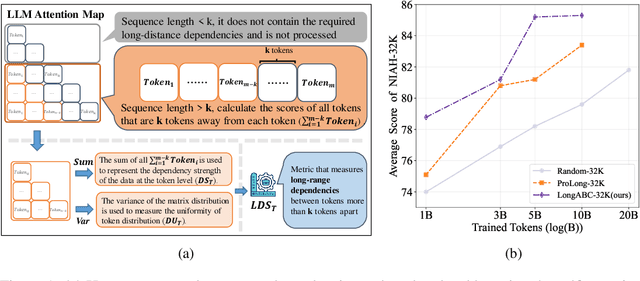
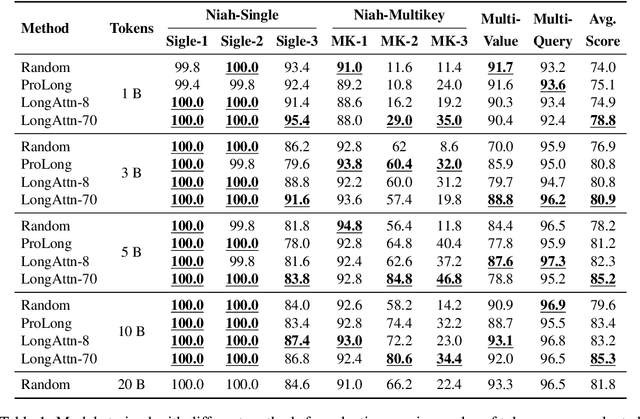
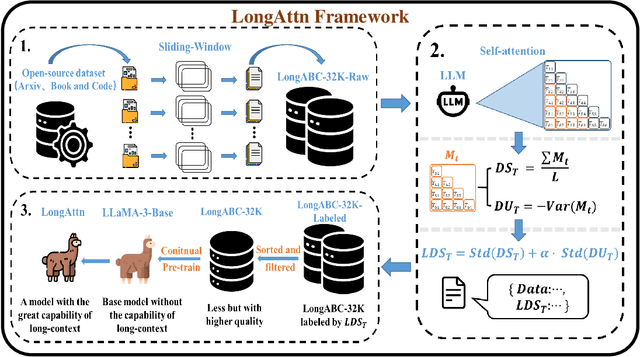
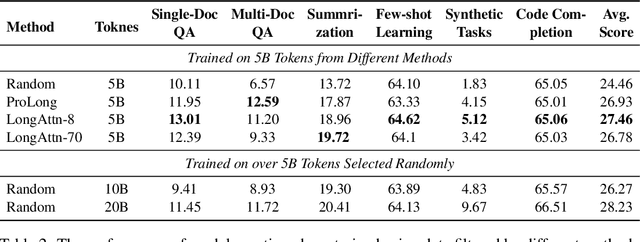
With the development of large language models (LLMs), there has been an increasing need for significant advancements in handling long contexts. To enhance long-context capabilities, constructing high-quality training data with long-range dependencies is crucial. Existing methods to select long-context data often rely on sentence-level analysis, which can be greatly optimized in both performance and efficiency. In this paper, we propose a novel token-level framework, LongAttn, which leverages the self-attention mechanism of LLMs to measure the long-range dependencies for the data. By calculating token-level dependency strength and distribution uniformity of token scores, LongAttn effectively quantifies long-range dependencies, enabling more accurate and efficient data selection. We filter LongABC-32K from open-source long-context datasets (ArXiv, Book, and Code). Through our comprehensive experiments, LongAttn has demonstrated its excellent effectiveness, scalability, and efficiency. To facilitate future research in long-context data, we released our code and the high-quality long-context training data LongABC-32K.
Stress Testing Generalization: How Minor Modifications Undermine Large Language Model Performance
Feb 18, 2025This paper investigates the fragility of Large Language Models (LLMs) in generalizing to novel inputs, specifically focusing on minor perturbations in well-established benchmarks (e.g., slight changes in question format or distractor length). Despite high benchmark scores, LLMs exhibit significant accuracy drops and unexpected biases (e.g., preference for longer distractors) when faced with these minor but content-preserving modifications. For example, Qwen 2.5 1.5B's MMLU score rises from 60 to 89 and drops from 89 to 36 when option lengths are changed without altering the question. Even GPT-4 experiences a 25-point accuracy loss when question types are changed, with a 6-point drop across all three modification categories. These analyses suggest that LLMs rely heavily on superficial cues rather than forming robust, abstract representations that generalize across formats, lexical variations, and irrelevant content shifts. This work aligns with the ACL 2025 theme track on the Generalization of NLP models, proposing a "Generalization Stress Test" to assess performance shifts under controlled perturbations. The study calls for reevaluating benchmarks and developing more reliable evaluation methodologies to capture LLM generalization abilities better.
When to Trust Aggregated Gradients: Addressing Negative Client Sampling in Federated Learning
Jan 25, 2023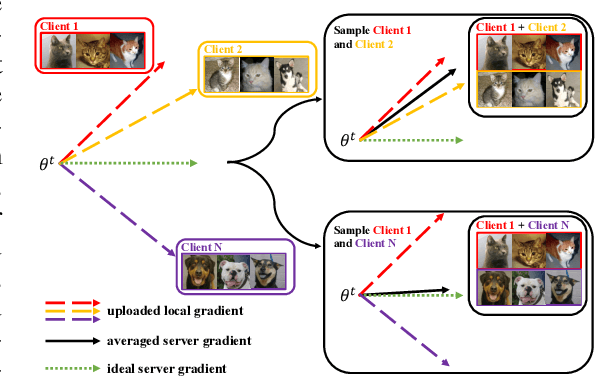
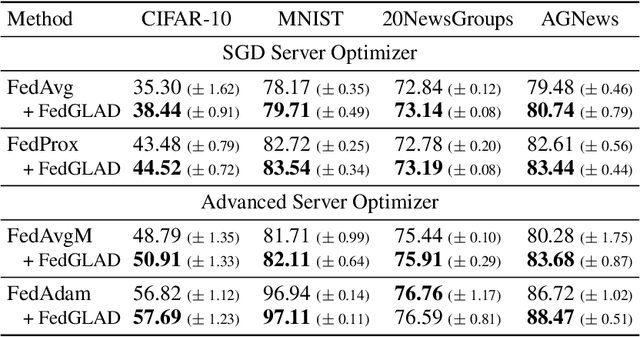
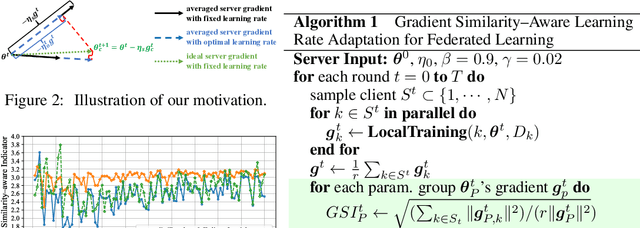
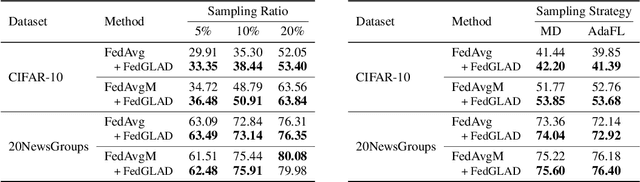
Federated Learning has become a widely-used framework which allows learning a global model on decentralized local datasets under the condition of protecting local data privacy. However, federated learning faces severe optimization difficulty when training samples are not independently and identically distributed (non-i.i.d.). In this paper, we point out that the client sampling practice plays a decisive role in the aforementioned optimization difficulty. We find that the negative client sampling will cause the merged data distribution of currently sampled clients heavily inconsistent with that of all available clients, and further make the aggregated gradient unreliable. To address this issue, we propose a novel learning rate adaptation mechanism to adaptively adjust the server learning rate for the aggregated gradient in each round, according to the consistency between the merged data distribution of currently sampled clients and that of all available clients. Specifically, we make theoretical deductions to find a meaningful and robust indicator that is positively related to the optimal server learning rate and can effectively reflect the merged data distribution of sampled clients, and we utilize it for the server learning rate adaptation. Extensive experiments on multiple image and text classification tasks validate the great effectiveness of our method.